Factory Pattern
How it works
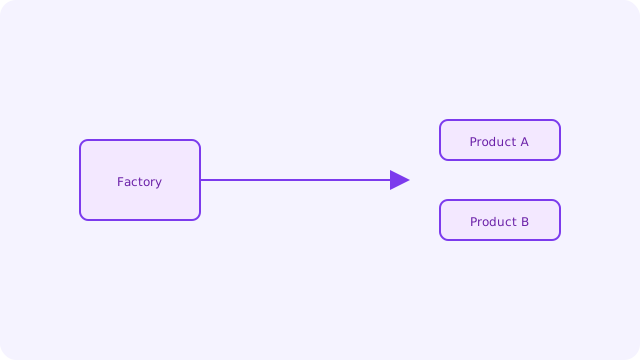
- Input arrives
- Core component processes
- Result produced
- Observe and iterate
Overview
Use factories when you need to create families of related objects without tightly coupling to concrete classes.Learning Objectives
🎯 Understanding Object Creation Patterns
Master the fundamental concept of abstracting object creation to promote loose coupling and flexible design
🔧 Implementation Techniques
Learn different factory pattern variations including Simple Factory, Factory Method, and Abstract Factory
⚡ Design Benefits
Understand how factories enable runtime object creation decisions and support the Open/Closed Principle
Real-World Examples
🚗 Vehicle Manufacturing System
Tesla's production line creates different vehicle models (Model S, Model 3, Model X) based on customer orders without exposing specific assembly processes
📱 UI Component Libraries
React component libraries like Material-UI use factory functions to create themed components with consistent styling across applications
🌐 Database Connection Pools
Connection factories in enterprise applications create appropriate database connections (MySQL, PostgreSQL, MongoDB) based on configuration
🔐 Authentication Systems
OAuth providers use factories to create authentication handlers for different services (Google, Facebook, GitHub) with unified interfaces
How it works
- Define a Product interface
- Implement ConcreteProduct variants
- Provide a Factory that returns Product
- Clients use Factory, unaware of the concrete classes
Code example
A simple factory that creates a Vehicle by kind without exposing constructors:interface Vehicle { deliver(): string }
class Truck implements Vehicle { deliver(): string { return 'Deliver by land' } }
class Ship implements Vehicle { deliver(): string { return 'Deliver by sea' } }
function createVehicle(kind: string): Vehicle {
if (kind === 'truck') return new Truck();
if (kind === 'ship') return new Ship();
throw new Error('Unknown kind: ' + kind);
}
var v = createVehicle('truck');
// v.deliver() -> 'Deliver by land'
Implementation Notes
- Use Simple Factory for basic object creation with conditional logic
- Apply Factory Method when subclasses need to decide which objects to create
- Choose Abstract Factory for creating families of related objects
- Consider using dependency injection containers in larger applications
- Combine with Builder pattern for complex object construction scenarios
Best Practices
- Keep factory methods focused on single responsibility of object creation
- Use enums or constants instead of string literals for factory parameters
- Implement proper error handling for unsupported object types
- Consider caching or pooling objects when creation is expensive
- Document the lifecycle and ownership of created objects clearly
Common Pitfalls
- Creating overly complex factories that violate Single Responsibility Principle
- Using factories when simple constructors would suffice, adding unnecessary abstraction
- Forgetting to handle memory cleanup in factories that manage object lifecycle
- Mixing business logic with object creation logic in factory methods
- Not providing clear interfaces causing tight coupling between factory and products